

The Science Behind Autonomous Biosecurity
Three converging technology pillars — swarm intelligence, plasma sterilisation, and AI-driven contamination modelling — engineered into a single deployable platform.
Bio-Inspired Ant Colony Optimisation (B-ACO)
Conventional robotics assigns fixed routes to individual units. B-ACO inverts this: each micro-robot acts as an autonomous agent, depositing and reading virtual pheromone trails across a shared spatial model. The swarm self-organises into optimal coverage patterns without central coordination.
Stigmergic Communication
Robots communicate indirectly through the environment. Each unit writes detection events and coverage density to a shared mesh-radio state map. Neighbours read this map and bias their trajectories toward under-sampled zones — no direct robot-to-robot messaging required.
Adaptive Pheromone Decay
Virtual pheromone trails decay over time, preventing the swarm from fixating on previously high-risk zones. Decay rate is tuned dynamically based on pathogen volatility and environmental conditions, ensuring continuous re-evaluation of the entire coverage area.
Fault-Tolerant Redundancy
Unit failure is handled gracefully: the swarm detects coverage gaps left by an offline robot and redistributes workload within 90 seconds. No single point of failure exists — the system degrades proportionally, never catastrophically.
Emergent Threat Response
When a unit detects a contamination event above threshold, it emits a high-intensity pheromone burst. Nearby units converge on the zone for dense sampling and, in CAP-equipped configurations, immediate plasma treatment — without any central dispatch command.
Multi-Modal Detection at the Edge
Each Bio-Robotix unit carries a heterogeneous sensor array designed for simultaneous biological, chemical, and physical threat detection. All processing runs on-board — no cloud round-trip required for real-time response.
Tier 1
Biological Detection
Tier 2
Environmental Monitoring
Tier 3
Navigation & Mapping
From Raw Sensor Data to Actionable Intelligence
Raw sensor streams are processed through a four-stage AI pipeline running entirely on the swarm's distributed edge compute fabric. No data leaves the facility perimeter unless the operator explicitly enables cloud sync.
Multi-Sensor Fusion & Classification
Hyperspectral, fluorescence, and e-nose signals are fused through a late-fusion ensemble model. The classifier outputs pathogen identity, confidence score, and estimated concentration — updated at 10 Hz per unit.
Probabilistic Contamination Mapping
Swarm-wide detections are fused into a voxel grid updated every 15 minutes. Each voxel carries a contamination probability, pathogen classification confidence, and timestamp. The map is rendered as a live heatmap overlay on the operator dashboard.
Spread Trajectory Forecasting
A physics-informed neural network integrates the contamination map with real-time weather data (wind, humidity, temperature) and facility airflow models to forecast pathogen spread up to 72 hours ahead. Outputs probability contours at 6-hour intervals.
Economic Impact Estimation
Spread forecasts are correlated with crop yield models (agricultural) or HAI cost databases (medical) to produce a real-time economic risk score. Operators receive prioritised intervention recommendations ranked by cost-per-unit-treated.
Chemical-Free Sterilisation at Room Temperature
Cold Atmospheric Plasma (CAP) is generated by applying a high-frequency electric field to a gas stream at ambient pressure and temperature. The resulting plasma contains reactive oxygen species (ROS), reactive nitrogen species (RNS), UV photons, and charged particles — a multi-modal antimicrobial cocktail.
Unlike UV-C or chemical disinfectants, CAP attacks pathogens through simultaneous oxidative stress, membrane disruption, and DNA damage. This multi-target mechanism prevents resistance development — no pathogen has demonstrated acquired resistance to CAP in over 15 years of research.
Bio-Robotix's CAP module operates at <40°C surface temperature, produces ozone below OSHA limits (<0.05ppm), and emits non-ionising UV only — making it safe for continuous operation in occupied clinical and agricultural environments.
CAP Advantages
Zero-Touch Robotic Abattoir
Halal, hygienic, AI-cut meat for Egypt. No human hand touches the animal from truck to retail pack.
Executive Summary
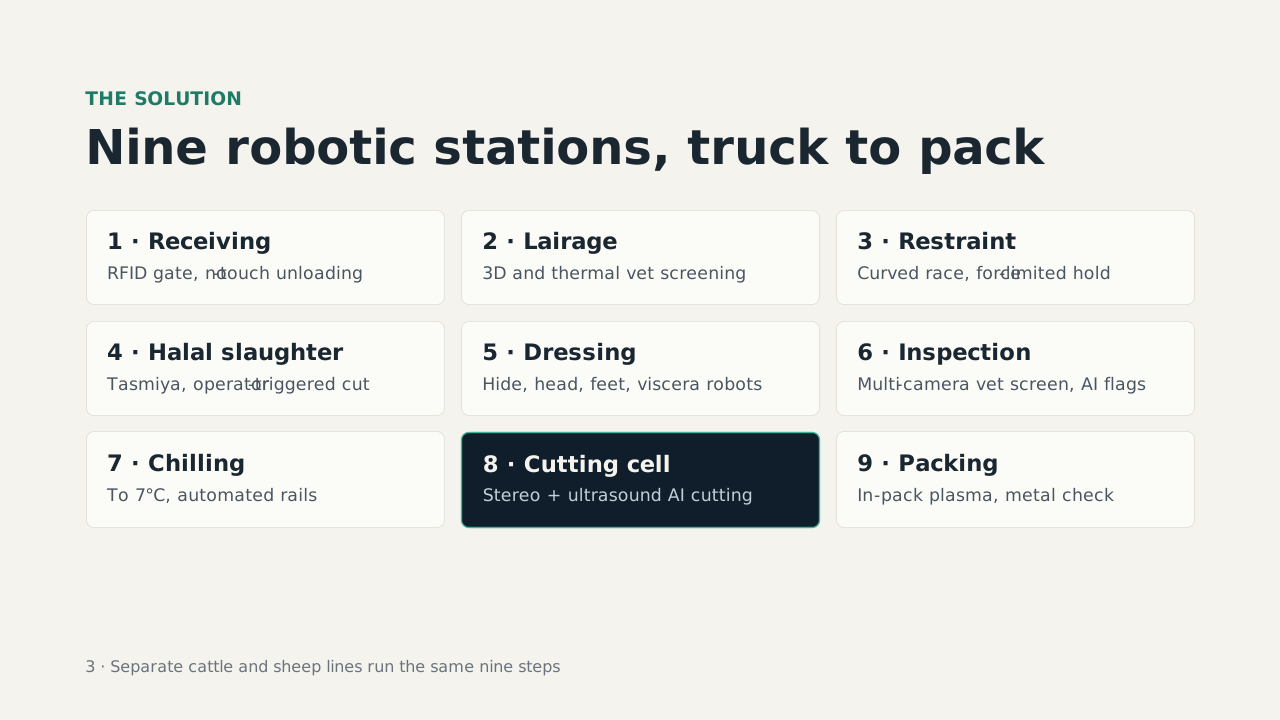
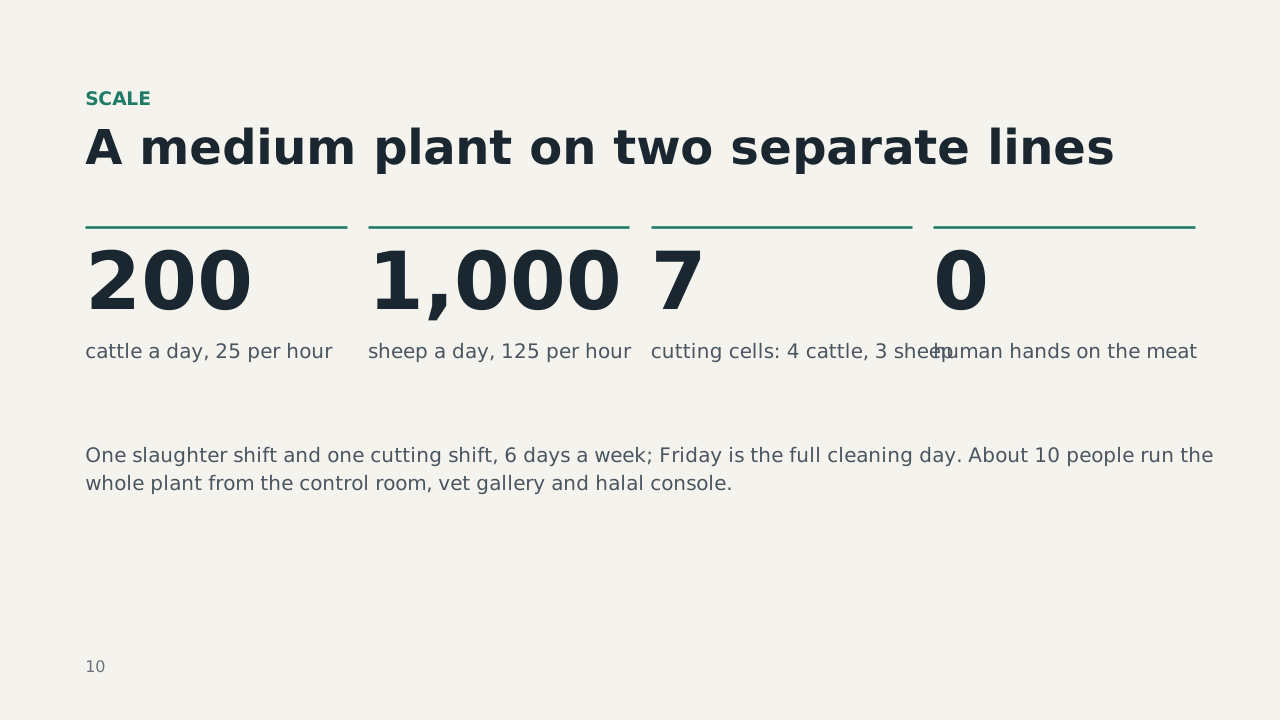
A halal robotic abattoir where no human hand touches an animal or carcass from unloading until retail cuts are packed. 200 cattle and 1,000 sheep a day on two separate lines. People supervise from a control room, vet gallery and remote halal console — robots, conveyors and restraint systems do all physical handling.
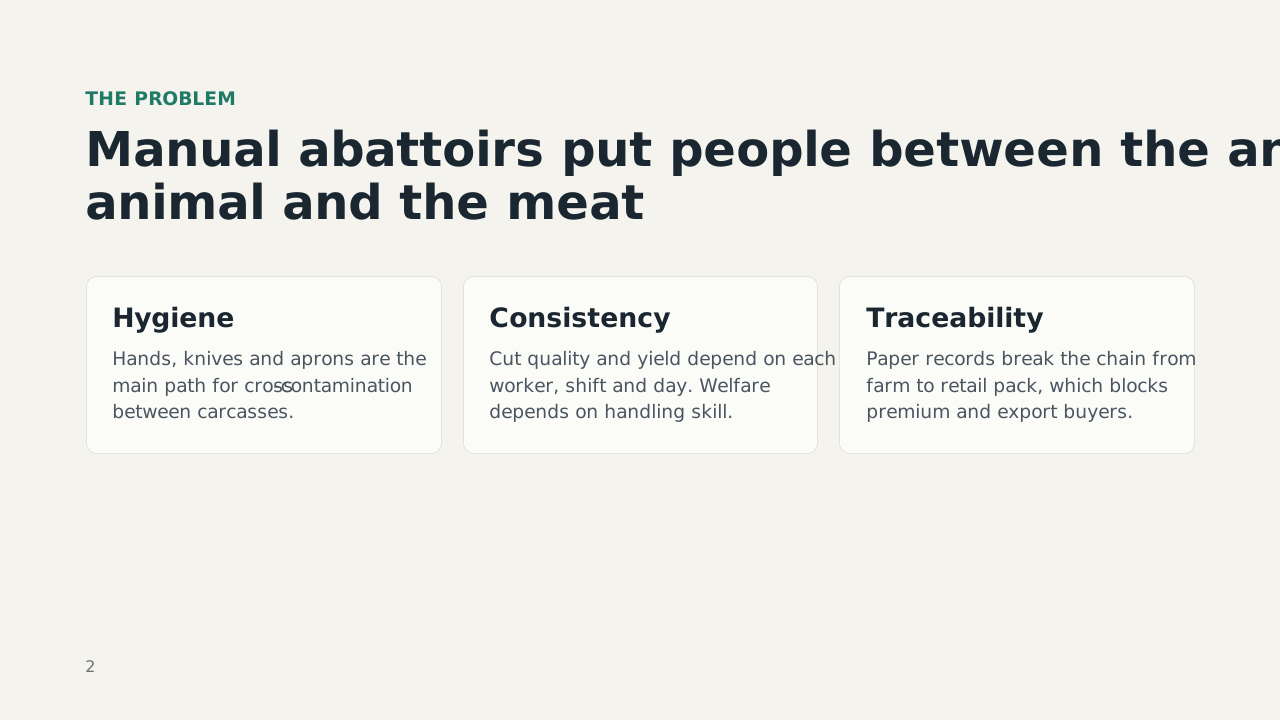
The Problem — Manual Abattoirs Put People Between the Animal and the Meat
Hygiene
Hands, knives and aprons are the main path for cross-contamination between carcasses. Every human touchpoint is a contamination vector.
Consistency
Cut quality and yield depend on each worker, shift and day. Welfare depends on handling skill. Automation eliminates shift-to-shift variance.
Traceability
Paper records break the chain from farm to retail pack, blocking premium and export buyers. Every carcass gets a digital ID from RFID gate to dispatch.
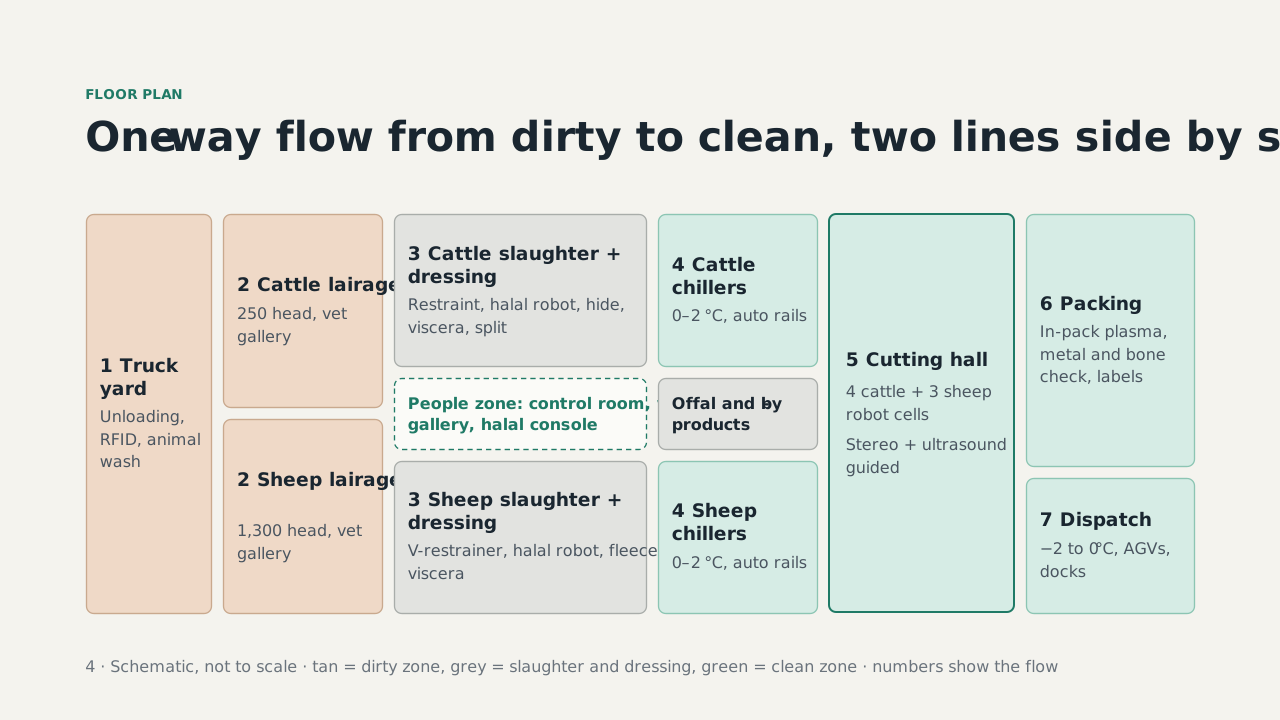
The Solution — Nine Robotic Stations, Truck to Pack
Schematic floor plan, not to scale. Tan = dirty zone, grey = slaughter and dressing, green = clean zone.
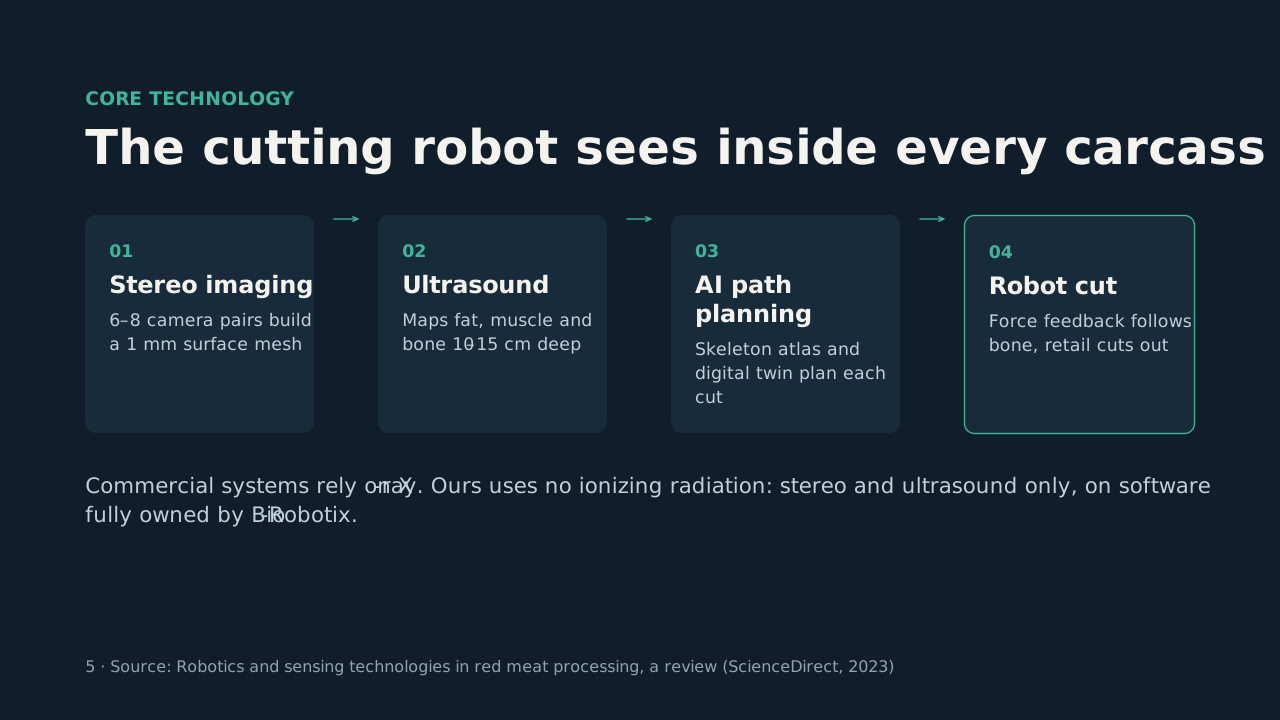
Core Technology — The Cutting Robot Sees Inside Every Carcass
No ionising radiation anywhere. Stereo imaging and ultrasound only — software fully owned by Bio-Robotix.
Stereo Imaging
8 camera pairs (cattle) / 6 pairs (sheep) build a 1 mm surface mesh. Pulsed LED + structured light; cross-polarised filters remove glare from wet fat. Capture time ≤2 s.
Ultrasound Mapping
Robot-held phased-array probes (2–7.5 MHz) scan along spine, ribs, loin and round through a thin water film. Maps fat depth, muscle boundaries and bone contours 10–15 cm deep. No ionising radiation.
AI Path Planning
Species-specific skeleton atlas fitted to measured landmarks. Deep-learning model predicts joints and seam lines. Cut planner generates 3D knife/saw trajectories optimised for yield. Digital twin simulates every cut before the robot moves.
Robot Execution
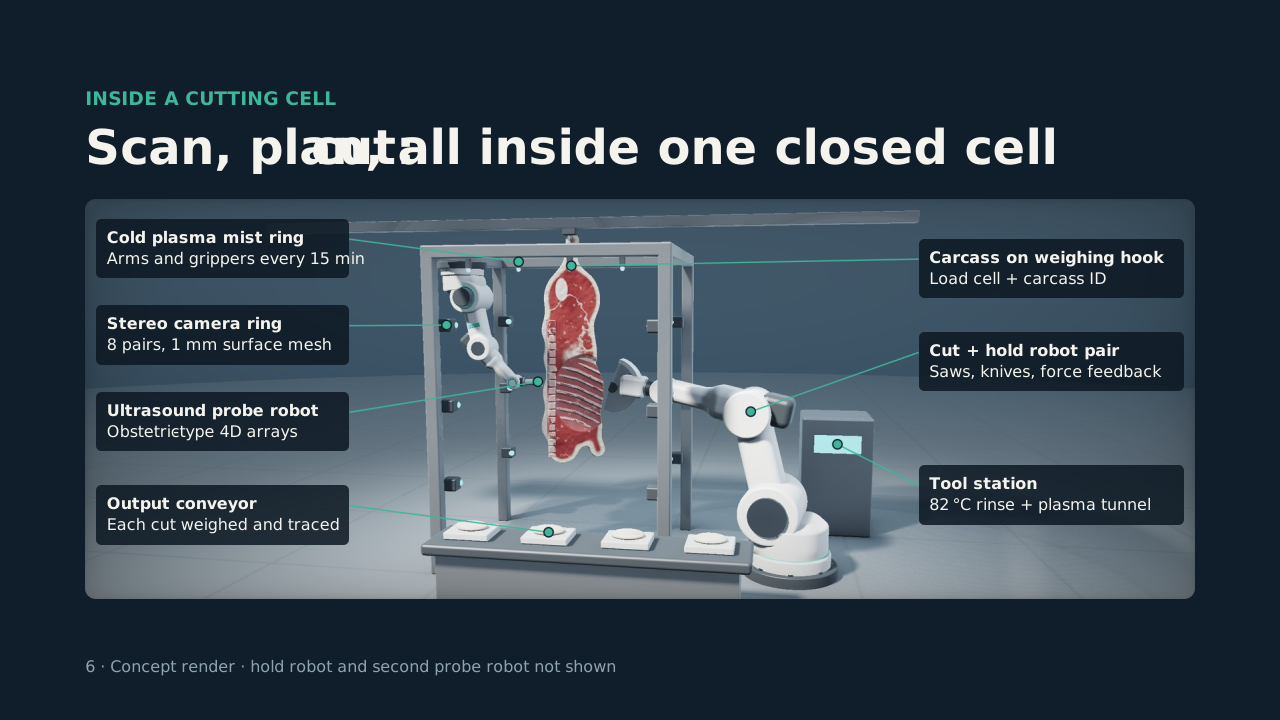
6-axis IP69K food-grade robots (≥150 kg payload for cattle, 20–50 kg for sheep). 1 kHz force/torque feedback follows bone contours. Tools auto-change and sterilise at every cycle. Each cut weighed and linked to carcass ID.
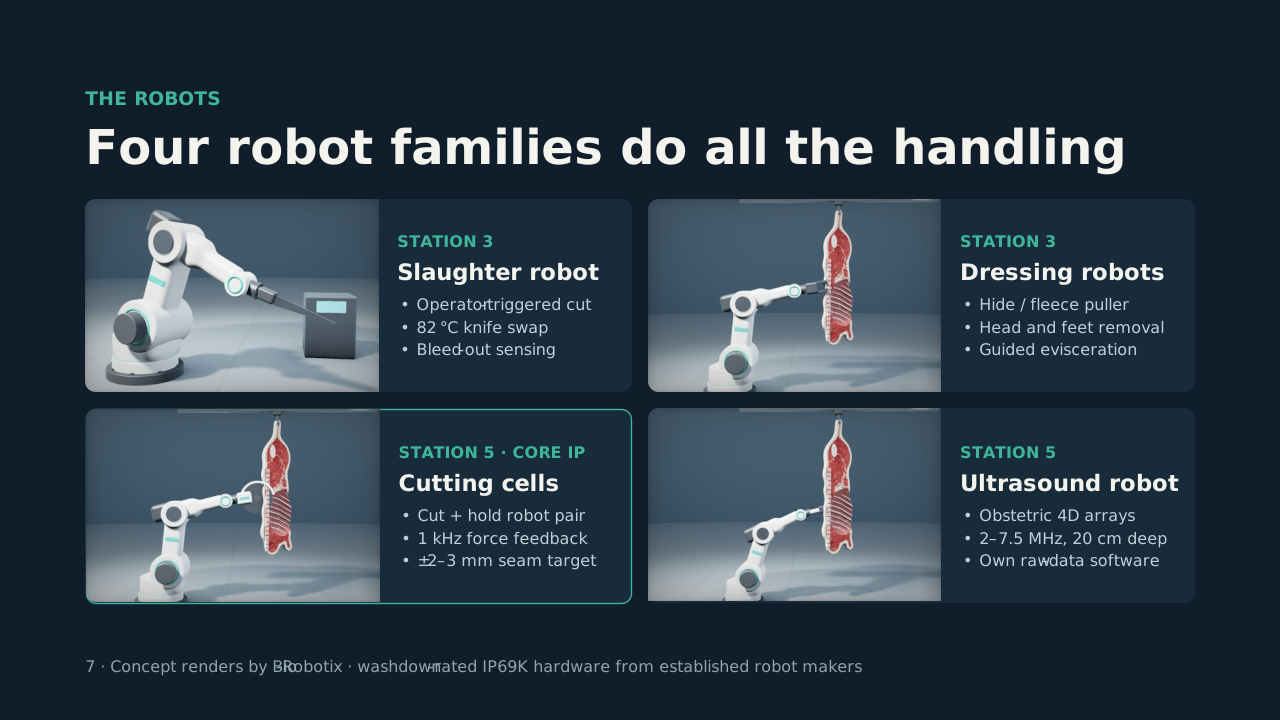
Four Robot Families — All the Handling
Slaughter Robot
- Operator-triggered cut — tasmiya required
- 30–40 cm blade, auto-sharpened every animal
- 82°C knife swap, two knives alternating
- Bleed-out verified by blood-flow sensor + thermal imaging
Dressing Robots
- Hide / fleece puller with robot clamps
- Head and feet removal, rodding and bunging
- Vision-guided evisceration — puncture triggers auto rail-out
- Splitting robot saw, spinal cord removed where required
Cutting Cells
- Cut + hold robot pair, 6-axis IP69K food-grade
- 1 kHz force/torque feedback follows bone
- ±3 mm seam accuracy (cattle), ±2 mm (sheep)
- ≤5% remote-review rate after training
Ultrasound Robot
- Phased-array probes, 2–7.5 MHz
- Scans to 10–15 cm depth
- Registered onto stereo mesh for volumetric model
- Own raw-data software — no third-party IP
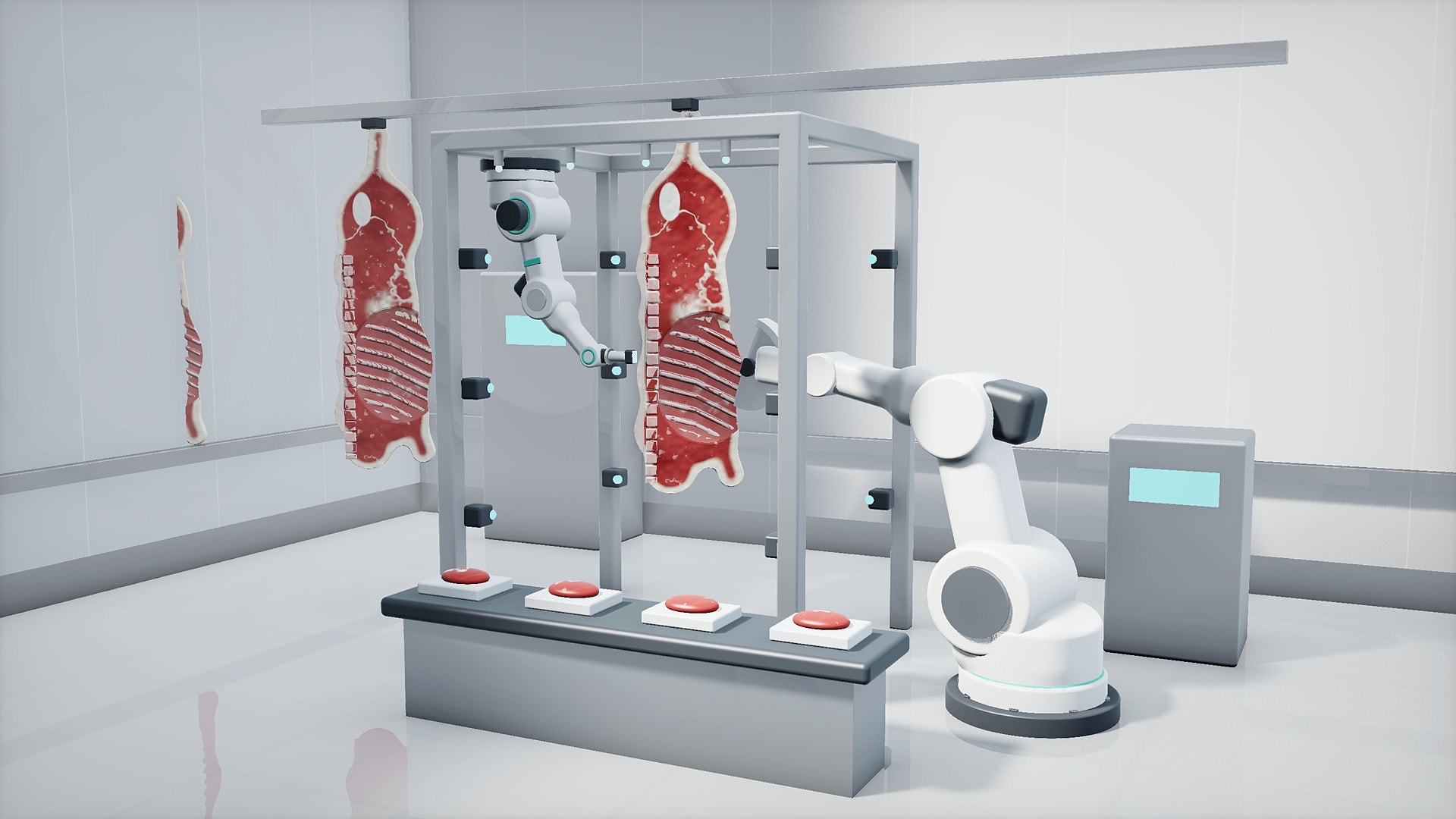
Washdown-rated IP69K hardware from established robot makers. Concept renders by Bio-Robotix.
Halal by Design — Fatwa Secured
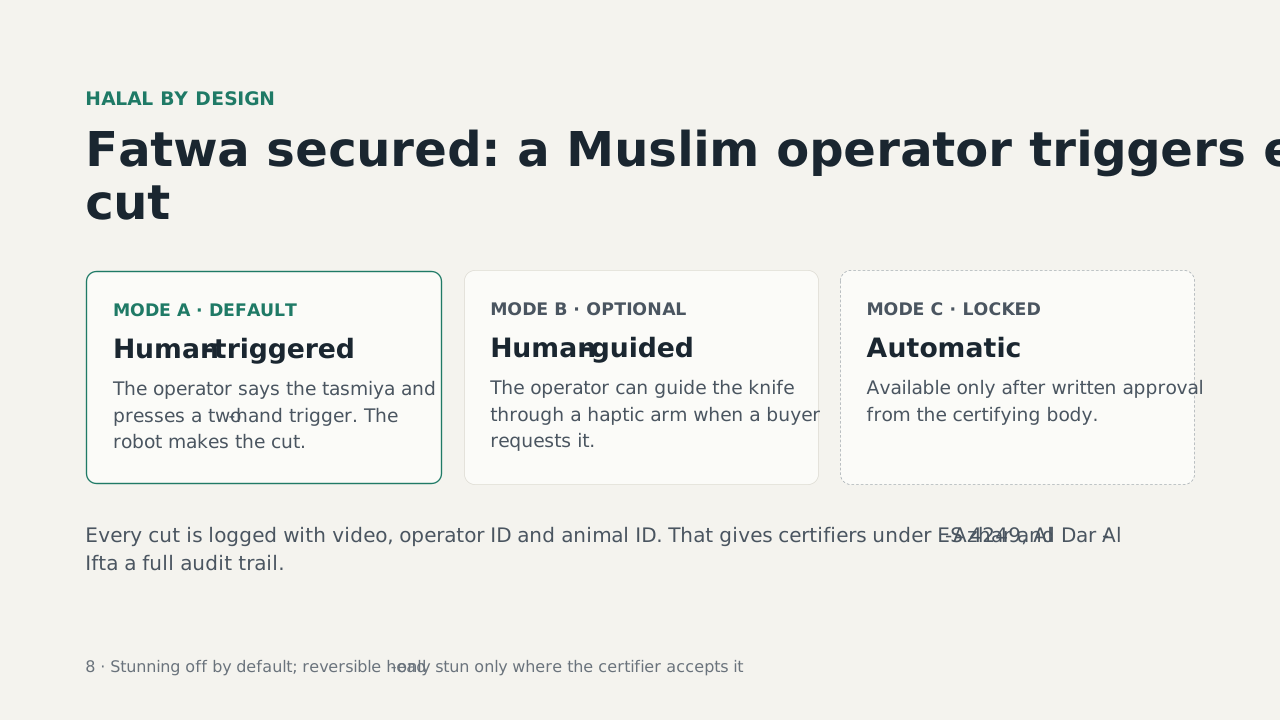
A Muslim operator triggers every cut. Full video audit trail per animal — certifiers under ES 4249, Al-Azhar and Dar Al-Ifta have complete access.
Human-Triggered
The operator says the tasmiya and presses a two-hand trigger. The robot makes the cut. Every cut is logged with video, operator ID, timestamp and animal ID.
Human-Guided
The operator guides the knife through a haptic master arm; the robot adds force and precision. Fallback where a fatwa requires the human to guide the knife.
Automatic
Ships in software but stays disabled until the certifying body approves it in writing. Certifiers under ES 4249, Al-Azhar and Dar Al-Ifta have full audit access.
Stunning off by default; reversible head-only stun only where the certifier accepts it.
Hygiene & Cold Plasma — Disinfection on a Fixed Clock
All plasma systems designed and built in-house by Bio-Robotix. Cold plasma reduces E. coli ~1.6–2.7 log and Listeria ~1.1 log on meat in 2 min (PMC9740106). Ozone monitored and extracted to stay below 0.1 ppm.
Built to Codex CAC/RCP 58-2005, NFSA, ISO 22000 and EHEDG design, with HACCP control points monitored on every carcass.
HACCP Critical Control Points (Draft)
Economics — Base Case
Track Record — Proven in Germany
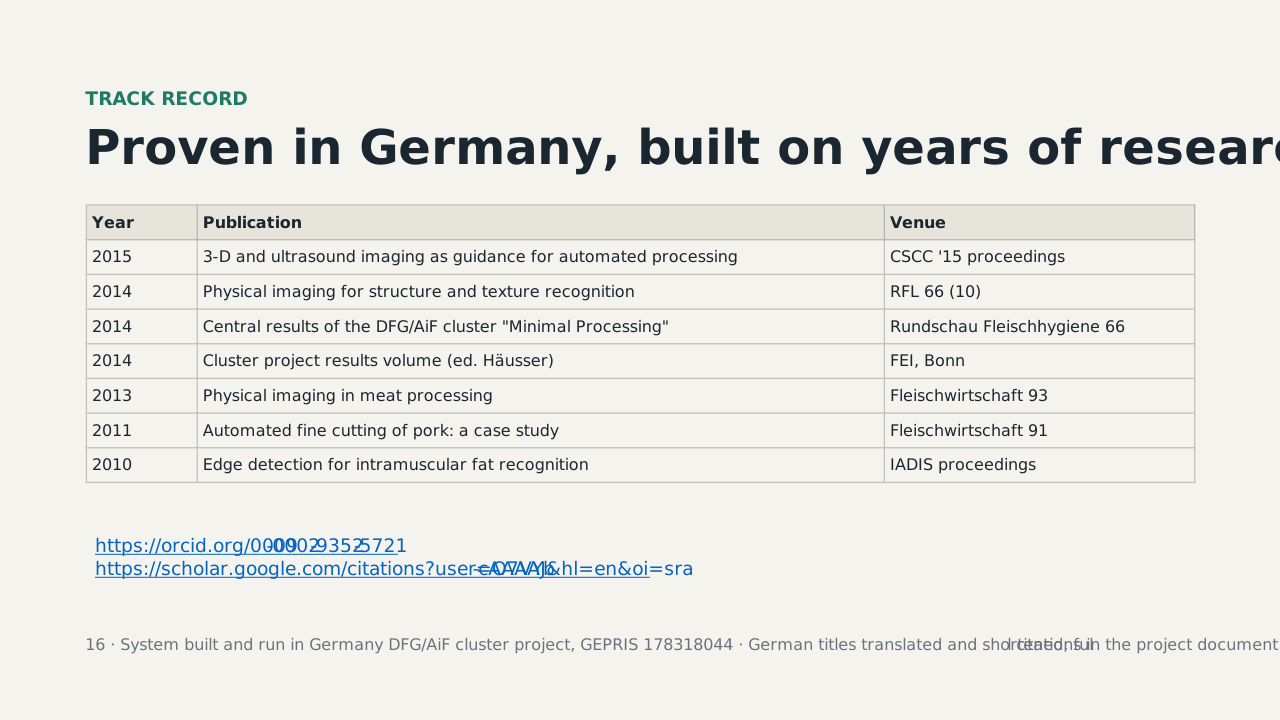
System built and run under DFG/AiF cluster project GEPRIS 178318044. The two biggest risks are already cleared: the fatwa is secured, and the stereo and ultrasound cutting system has been built and run in Germany by the Bio-Robotix team.
Part II — Cutting Robot Technical Specification
Cell architecture, stereo imaging subsystem, ultrasound robot, cut path planning, force control, safety and hygiene integration, and indicative bill of materials.
Target Pathogens
Regulatory Compliance
Automated HACCP-aligned treatment logs and contamination maps are generated continuously and exportable in PDF or CSV format for BRC, IFS, SQF, and FSSC 22000 audit submissions.
Ready to See the Technology in Action?
Request a technical briefing or reserve your deployment allocation.